

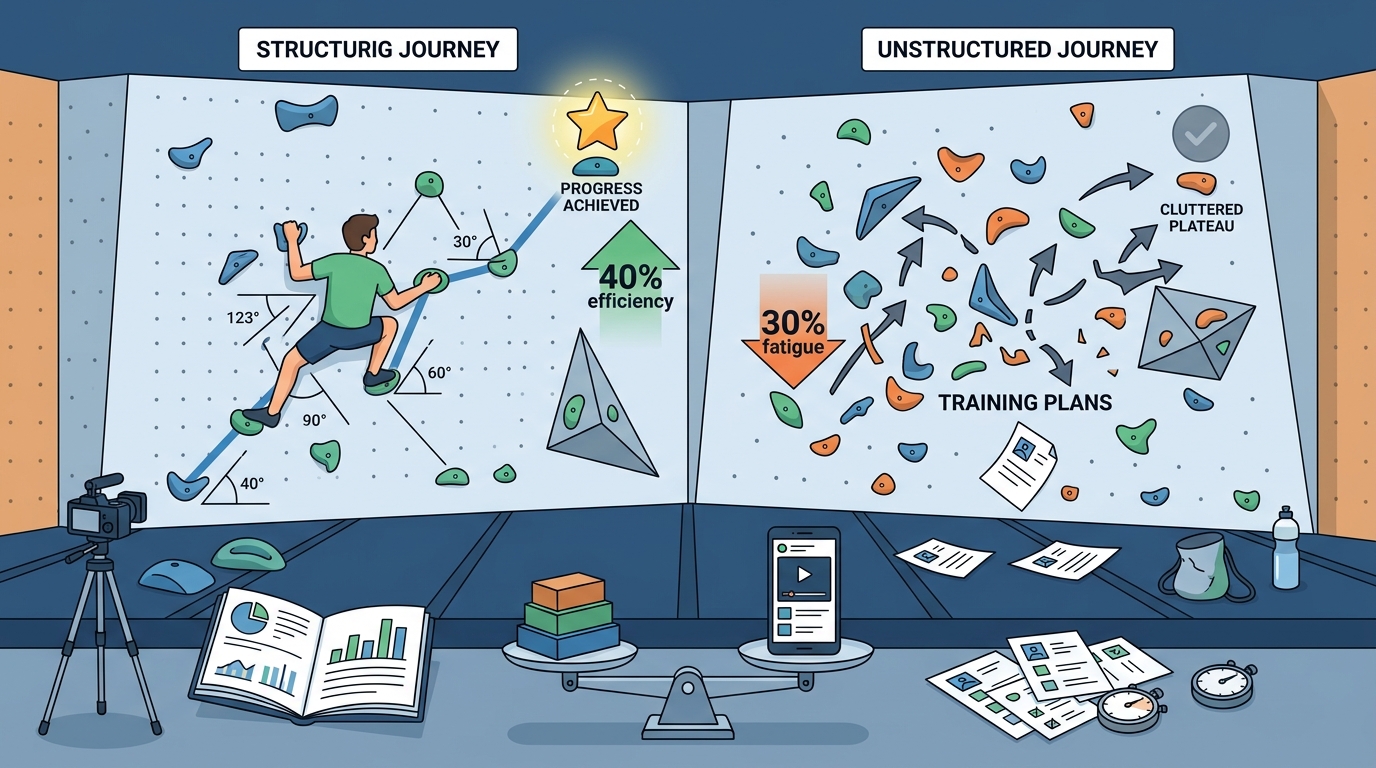
Choosing the right online bouldering coaching service is a critical decision for any climber looking to break through plateaus. According to recent industry data, structured training programs can increase climbing efficiency by up to 40% compared to unstructured gym sessions. This statistic highlights the massive gap between random climbing and intentional progression. The market is flooded with options, ranging from generic PDF plans to high-touch video analysis. This guide compares the primary service models to help you identify the best fit for your specific goals. (ABOUT Paradigm Climbing)
Understanding Coaching Models
Online bouldering coaching has evolved significantly over the last decade. It is no longer just about sending a workout list via email. Modern coaching integrates physiological data, video analysis, and psychological support. Coaching is the systematic guidance of an athlete's training to achieve specific performance goals. This definition encompasses more than just physical exertion. It includes recovery protocols, nutrition advice, and mental conditioning. (Paradigm Climbing Rock Climbing)
When comparing services, you must first identify which model aligns with your learning style. Some climbers thrive on rigid schedules and clear instructions. Others need the flexibility to adapt to their daily energy levels. Understanding these differences is the first step in selecting a provider that matches your operational needs. (Paradigm Climbing Rock Climbing)
Custom Plans vs. Pre-Written Programs
The most significant divide in the online coaching market is between custom programming and pre-written plans. Each approach offers distinct advantages depending on your experience level and budget.
The Custom Programming Advantage
Custom programming involves a coach designing a unique training block based on your specific weaknesses, goals, and current fitness level. This approach is ideal for climbers who have hit a significant plateau or are preparing for a specific project. The primary benefit is adaptability. If you get injured or have a busy week, a custom coach can adjust your volume and intensity immediately. This prevents overtraining and ensures consistent progress.
Custom plans often include regular check-ins. These sessions allow the coach to review your video footage and make real-time corrections. This feedback loop is crucial for technical improvement. It transforms vague advice into actionable steps. You are not just following a calendar; you are engaging in a dialogue about your performance.
The Pre-Written Program Efficiency
Pre-written programs, often called "Full Spectrum" series or base plans, are designed for climbers who prefer structure without the high cost of one-on-one attention. These programs are typically periodized and follow a logical progression. They are excellent for beginners to intermediate climbers who need a roadmap to follow.
The advantage here is consistency and affordability. You get a proven curriculum without the need for constant communication. However, the limitation is rigidity. If a specific exercise feels wrong for your body, you must decide whether to modify it or ignore it. There is no immediate expert to validate your adjustments. This model works best for self-starters who are disciplined and capable of self-assessment.
The Role of Coach Expertise
Not all coaches are created equal. The background of your coach significantly impacts the quality of your training. Elite climbers often transition into coaching because they understand the biomechanics of movement at a high level. Their experience with difficult grades provides them with a deep library of problem-solving strategies.
When evaluating coaches, look for specific credentials and experience. A coach with a background in competitive climbing, such as World Cup participation, brings a unique perspective on route reading and tension management. Competitive climbing experience provides coaches with advanced techniques for efficiency and speed. This is particularly valuable for boulderers who need to execute dynamic moves with precision.
Additionally, consider coaches with backgrounds in strength and conditioning. These professionals understand muscle physiology and injury prevention. They can design programs that build the necessary strength without causing burnout. This dual expertise in climbing and fitness is rare and highly valuable. It ensures that your training is both effective and sustainable.
Technology and Feedback Loops
The medium of communication is just as important as the content of the training. Modern online coaching relies heavily on technology to bridge the physical distance. Video analysis is the cornerstone of effective remote coaching. It allows coaches to see details that are invisible to the naked eye.
Video Analysis Importance
When you send video footage of your climbs, the coach can identify subtle errors in foot placement, hip positioning, or arm extension. These small adjustments can lead to significant improvements in performance. Without video, coaching is largely guesswork. With video, it becomes a precise science.
Look for services that offer detailed video breakdowns. Some coaches use annotation tools to draw lines and arrows on your footage. This visual aid makes the feedback clearer and easier to implement. It reduces the cognitive load required to understand the correction.
Communication Frequency
Another key differentiator is the frequency of communication. Some services offer daily check-ins, while others provide weekly summaries. Daily check-ins are beneficial for climbers who need constant motivation and accountability. They help maintain momentum and prevent procrastination. Weekly summaries are sufficient for experienced climbers who are self-motivated and prefer autonomy.
Consider your personal needs. Do you thrive on frequent interaction, or do you prefer to work independently? Your answer will guide you toward the right service level. Over-communication can be as detrimental as under-communication if it leads to confusion or dependency.
Comparison Summary
To help you make an informed decision, here is a comparison of the primary online bouldering coaching models.
| Feature | Custom Coaching | Pre-Written Plans | Hybrid Model |
|---|---|---|---|
| Personalization | High | Low | Medium |
| Feedback Loop | Real-time / Weekly | None / Monthly | Weekly |
| Cost | High | Low | Medium |
| Best For | Elite / Plateaued Climbers | Beginners / Self-Starter | Intermediate Climbers |
| Flexibility | High | Low | Medium |
Key Takeaways
- Structured training increases efficiency: Data shows that climbers using structured programs see up to 40% greater efficiency than those climbing randomly.
- Custom plans offer adaptability: They allow for immediate adjustments based on injury, fatigue, or progress, ensuring long-term sustainability.
- Pre-written plans provide structure: They are cost-effective and ideal for climbers who need a clear roadmap without high-touch support.
- Coach expertise matters: Look for coaches with competitive backgrounds and strength conditioning certifications for holistic development.
- Video analysis is critical: It enables precise technical corrections that are impossible to convey through text alone.
- Communication frequency varies: Choose a service that matches your need for accountability, from daily check-ins to weekly summaries.
- Experience levels dictate fit: Beginners often benefit from pre-written plans, while advanced climbers require custom coaching to break through plateaus.
Frequently Asked Questions
How do I know if I need custom coaching or a pre-written plan?
If you are a beginner or have a consistent routine, a pre-written plan may suffice. If you are an advanced climber hitting a plateau or preparing for a specific project, custom coaching is likely necessary for targeted progress.
What is the difference between a CSCS certified coach and a regular climbing coach?
A CSCS (Certified Strength and Conditioning Specialist) coach has formal education in physiology and injury prevention. They design training that balances climbing specificity with overall athletic health, reducing the risk of overuse injuries.
Can online coaching replace in-person coaching?
For many climbers, online coaching is equally effective, especially with video analysis. It offers the flexibility to train anywhere while receiving expert guidance. However, in-person coaching provides tactile feedback that can be beneficial for certain techniques.
How often should I communicate with my online coach?
Communication frequency depends on the service level. Custom coaching often includes weekly or bi-weekly check-ins. Pre-written plans may have no direct communication. Choose based on your need for accountability and support.
What equipment do I need for online coaching?
You need a climbing gym or outdoor access, a tripod or stable surface for video recording, and a smartphone or camera. Some coaches may recommend specific training tools like hangboards or campus boards, but these are optional.
Is online coaching suitable for beginners?
Yes, but beginners often benefit more from pre-written plans or hybrid models. They provide structure without the complexity of custom programming. As you progress, you can transition to custom coaching for more specialized guidance.
How long does it take to see results from online coaching?
Results vary based on consistency and starting level. Most climbers see noticeable improvements in strength and technique within 8 to 12 weeks of following a structured program. Consistency is the key factor in achieving rapid progress.
Start Your Journey
Choosing the right online bouldering coaching service is an investment in your climbing future. By understanding the differences between custom plans, pre-written programs, and the role of coach expertise, you can make an informed decision. Paradigm Climbing offers both custom training plans and pre-written programs designed to maximize your potential. Whether you are a beginner or an elite climber, our team of experienced coaches is ready to guide you. Visit our Training Plans page to explore your options. Contact Coach Charlie directly to discuss your specific goals. Take the first step toward your climbing potential today.