
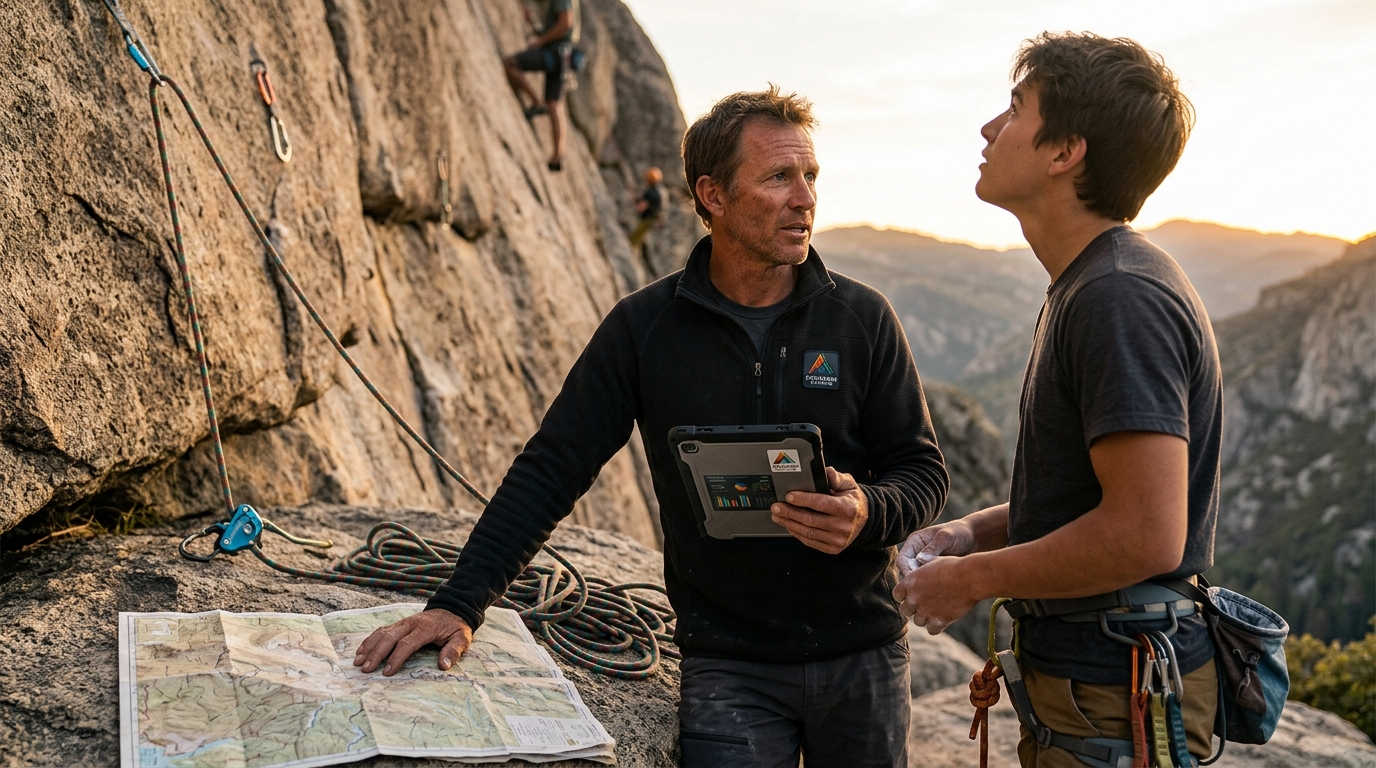
Create a Personalized Rock Climbing Training Plan to Achieve Your Goals
Building a sustainable climbing career requires more than just hanging on the wall. Data from the International Federation of Sport Climbing indicates that elite performance relies heavily on structured periodization rather than random intensity. Without a clear roadmap, climbers often hit plateaus or suffer from overuse injuries. This guide outlines the exact methodology used by professional coaches to transform unstructured effort into measurable progress. (ABOUT Paradigm Climbing)
Understanding Your Climbing Baseline
Before writing a single workout, you must establish where you currently stand. Climbing is a highly technical sport that demands a unique blend of finger strength, core tension, and flexibility. A formal definition of climbing specificity is the principle that training adaptations must closely mimic the specific movements and energy systems used in the target discipline. (Paradigm Climbing Rock Climbing)
Assess your current grade level accurately. Are you a V0 beginner or a V12 advanced boulderer? Your baseline determines the volume and intensity of your initial training blocks. If you are new to the sport, your body needs time to adapt to the load on your tendons and ligaments. Jumping into high-intensity hangboarding too early is a common mistake that leads to pulley injuries. (Paradigm Climbing Rock Climbing)
Consider your lifestyle constraints. How many hours per week can you realistically dedicate to training? A plan that requires six hours of gym time is useless if you can only commit to three. Honest self-assessment is the first step toward a successful training protocol.
Defining Specific Climbing Goals
Goals provide the direction for your training. Vague aspirations like "get stronger" are insufficient. You need specific, measurable outcomes. Goal specificity is the practice of defining clear, quantifiable targets to guide training intensity and volume.
Common climbing goals include:
- Grade Progression: Moving from V4 to V6 in six months.
- Competition Readiness: Preparing for a national championship.
- Outdoor Projecting: Building the endurance to climb 10 pitches in a day.
- Injury Prevention: Correcting muscle imbalances to stay healthy.
Each goal requires a different training focus. Competition climbers need explosive power and complex movement patterns. Outdoor climbers benefit more from aerobic capacity and finger endurance. Align your training blocks with your primary objective.
The Science of Periodization
Periodization is the systematic planning of athletic training. It involves progressive cycling of various aspects of a training program during a specific period. Periodization is the structured division of a training program into distinct phases to optimize performance and prevent overtraining.
A standard climbing training cycle typically includes:
1. The Base Phase
This phase focuses on building aerobic capacity and general strength. You will spend more time on campus boards, hangboards, and bodyweight exercises. The goal is to increase the volume of work your body can handle without breaking down.

2. The Strength Phase
Intensity increases while volume decreases. You will focus on max hangs, dynamic movements, and specific power drills. This phase is crucial for improving your strength-to-weight ratio.
3. The Peak Phase
This is the final push before your target event or project. Training volume drops significantly, but intensity remains high. You are simulating competition conditions or practicing specific project moves.
According to research in sports physiology, proper periodization can improve athletic performance by up to 10-15% compared to non-periodized training. This is because it allows for adequate recovery between high-intensity efforts.
Strength and Conditioning Essentials
Climbing is not just about pulling with your arms. It requires a holistic approach to physical fitness. Holistic climbing fitness is the integration of finger strength, core stability, shoulder health, and flexibility into a unified training system.
Finger Strength
Finger strength is the limiting factor for most advanced climbers. Use hangboards to build tendon strength. Start with static hangs and progress to dynamic lock-offs. Always warm up thoroughly before touching the hangboard.
Core and Tension
Your core connects your upper and lower body. A strong core allows you to maintain tension on the wall, reducing arm pump. Exercises like planks, leg raises, and hanging knee tucks are essential.
Shoulder Health
Shoulder injuries are common in climbing. Strengthen your rotator cuff and scapular stabilizers. Exercises like face pulls and external rotations help balance the pulling muscles used in climbing.
For a comprehensive approach, consider programs that include non-climbing strength training. This ensures balanced muscle development and reduces the risk of injury. A formal definition of muscle balance is the proportional strength development of agonist and antagonist muscle groups to prevent injury and optimize movement.
Recovery and Overtraining Prevention
Recovery is when your body actually gets stronger. Without adequate rest, training only leads to fatigue and injury. Active recovery is the practice of engaging in low-intensity exercise to promote blood flow and reduce muscle soreness after intense training.
Signs of overtraining include:
- Decreased performance despite continued training.
- Chronic fatigue and sleep disturbances.
- Increased susceptibility to illness.
- Loss of motivation and mood swings.
To prevent overtraining, incorporate rest days into your weekly schedule. Listen to your body and adjust your training load if you feel persistent pain or exhaustion. Sleep is also critical. Aim for 7-9 hours of quality sleep per night to maximize hormonal recovery.
Studies show that athletes who prioritize sleep and nutrition recover faster and perform better than those who neglect these factors. Recovery is not a luxury; it is a necessity for high performance.
Custom Plans vs. Pre-Written Programs
When creating your training plan, you have two main options: custom coaching or pre-written programs. Each has its advantages depending on your experience level and goals.
| Feature | Custom Coaching | Pre-Written Programs |
|---|---|---|
| Personalization | Highly tailored to individual needs | Generic, one-size-fits-all |
| Accountability | Direct coach support and feedback | Self-managed |
| Flexibility | Adapts to injuries and life events | Fixed schedule |
| Cost | Higher investment | Affordable |
| Best For | Elite athletes and serious intermediates | Beginners and casual climbers |
For most climbers aiming for significant progress, custom coaching offers a faster path to results. A coach can identify weaknesses and adjust your plan in real-time. This is particularly important for climbers who have hit a plateau or are preparing for competition.
Pre-written programs, such as the Full Spectrum series, are excellent for climbers who want structure without the cost of personal coaching. They provide a solid foundation but lack the nuance of individualized attention.
Key Takeaways
- Baseline Assessment: Accurately gauge your current grade and lifestyle constraints before starting.
- Specific Goals: Define clear, measurable outcomes to guide your training intensity.
- Periodization: Cycle through base, strength, and peak phases to optimize performance.
- Holistic Fitness: Include finger strength, core work, and shoulder health in your routine.
- Recovery: Prioritize sleep and rest days to prevent overtraining and injury.
- Custom Coaching: Work with a certified coach for personalized feedback and adjustments.
- Consistency: Long-term progress requires consistent effort over months and years.
Frequently Asked Questions
How often should I train to climb better?
For most climbers, training 3-4 days per week is optimal. This allows for adequate recovery between sessions. More frequent training may lead to overuse injuries if not managed carefully.
What is the best way to build finger strength?
Hangboarding is the most effective method. Start with open-hand hangs and progress to half-crimp and full-crimp positions. Always warm up thoroughly and limit the volume to avoid pulley strain.
Can I train for climbing if I have a previous injury?
Yes, but you must modify your training. Focus on rehabilitation exercises and avoid movements that cause pain. Consult with a physical therapist or a certified climbing coach for a safe plan.
How long does it take to see results from a training plan?
Visible results typically appear after 8-12 weeks of consistent training. However, physiological adaptations like tendon strength take longer to develop. Patience is key.
Do I need a coach to create a training plan?
Not strictly, but it is highly recommended. A coach can provide accountability, correct form, and adjust your plan based on your progress. This accelerates your learning curve.
What is the difference between bouldering and sport climbing training?
Bouldering training focuses on max power and short-duration strength. Sport climbing training emphasizes aerobic capacity and endurance. Your plan should reflect your primary discipline.
How do I prevent finger injuries?
Warm up properly, avoid overtraining, and use proper technique on the wall. Listen to your body and rest at the first sign of pain. Regular strength training for the forearms also helps.
Start Your Journey
Creating a personalized rock climbing training plan is the most effective way to achieve your goals. Whether you aim to send your first V-grade or compete at the World Cup level, structure and consistency are your best allies. Do not leave your progress to chance. Work with experts who understand the science of climbing performance.
Ready to take your climbing to the next level? Contact Coach Charlie Schreiber today to discuss your goals and get a custom training plan tailored to your needs. Visit our Training Plans page to explore your options and start climbing smarter.