
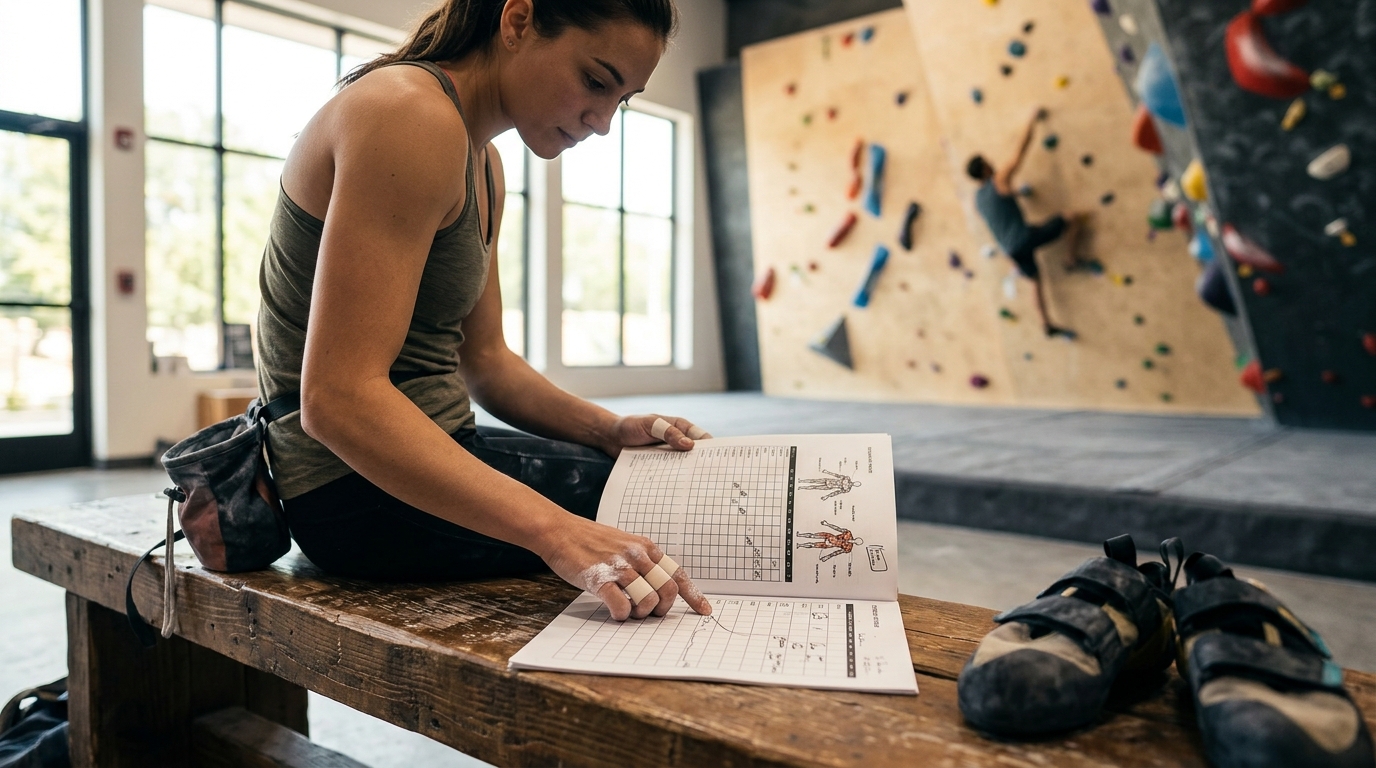
Creating a personalized rock climbing training plan is the single most effective way to break through plateaus and reach your specific athletic goals. According to data from the International Federation of Sport Climbing, the modern competitive landscape demands a hybrid athlete who possesses both elite-level strength and endurance. Without a structured approach, climbers often rely on unstructured gym sessions that yield diminishing returns. This guide outlines the exact methodology used by professional coaches to build periodized, goal-oriented training protocols. (ABOUT Paradigm Climbing)
Understanding Your Climbing Goals
Before writing a single workout, you must define what success looks like. A training plan for a boulderer differs vastly from one designed for a sport climber or a competition athlete. The first step is identifying your primary discipline. Are you aiming to send V10 boulders, climb 5.12a sport routes, or qualify for a national championship? Each goal requires a different physiological emphasis. (Paradigm Climbing Rock Climbing)
For bouldering, the focus is on maximal power and explosive strength over short durations. Sport climbing requires a balance of power and aerobic capacity for longer routes. Competition climbing demands a hybrid of all attributes plus specific route-reading skills. At Paradigm Climbing, we emphasize that clarity in goal-setting dictates the entire structure of your programming. Vague goals lead to vague results.
Assessing Your Current Physical Profile
Effective training begins with an honest audit of your current capabilities. You need to know your baseline strength, endurance, and flexibility. This assessment helps prevent injury by ensuring you do not jump into volume loads your tendons are not ready for. Climbing is a high-stress activity for the finger flexor tendons, which adapt much slower than muscle tissue.
Perform a standardized test for your primary discipline. For bouldering, attempt your current max grade. For sport climbing, climb a route at your limit and note your pump-out time. Record your hangboard strength metrics, such as your max hang weight on a 20mm edge. This data provides the starting point for your progression curve. Without this baseline, you cannot measure improvement or adjust load appropriately.
The Science of Periodization
Periodization is the systematic planning of athletic or physical training. It involves the progressive cycling of various aspects of a training program during a specific period. In climbing, this means alternating between phases of high intensity and lower volume, followed by phases of high volume and lower intensity. This approach prevents overtraining and ensures peak performance when it matters most.
Research in sports physiology indicates that unperiodized training leads to stagnation and increased injury risk. A typical annual plan might include a base phase, a strength phase, a power phase, and a taper phase before a competition or big send. Studies on athlete periodization confirm that structured variation in load and volume is critical for long-term adaptation. You must respect the recovery cycles to allow your body to supercompensate and grow stronger.
Key Training Components
A comprehensive climbing plan integrates several distinct training modalities. Each component serves a specific physiological purpose. Ignoring any one of these areas creates a bottleneck in your overall performance.

1. Hangboarding and Finger Strength
Finger strength is the limiting factor for most advanced climbers. Hangboarding involves hanging from a small edge with added weight. It is crucial to start with open-hand positions before progressing to crimped positions to protect your tendons. Always warm up thoroughly before hangboarding. Never hang on cold fingers.
2. Campus Boarding for Power
The campus board develops dynamic power and hand-eye coordination. It is a high-risk exercise that should only be attempted by climbers with a solid base of finger strength. Use it sparingly, focusing on quality over quantity. Power is the ability to generate force quickly, which is essential for dynamic moves and cruxes.
3. Aerobic and Anaerobic Endurance
Endurance training ensures you can sustain effort over long periods. This includes both aerobic capacity (long, steady efforts) and anaerobic capacity (short, high-intensity intervals). For sport climbers, interval training on a campus board or hangboard mimics the pump of a long route. For boulderers, repeated boulder sessions with short rest periods build the specific endurance needed for competition.
4. Mobility and Flexibility
Flexibility allows for efficient body positioning on the wall. Tight hips and shoulders force you to use more strength to compensate for poor technique. Incorporate yoga or dedicated stretching routines into your weekly schedule. Focus on hip openers, shoulder dislocates, and wrist mobility. Improved mobility reduces energy expenditure and prevents injury.
Structuring Your Weekly Schedule
How you distribute your training across the week is as important as the exercises themselves. A common mistake is climbing hard every day without adequate rest. Tendons require 48 to 72 hours to recover from intense loading. Here is a sample structure for an intermediate climber:
| Day | Focus | Activity Type | Intensity |
|---|---|---|---|
| Monday | Finger Strength | Hangboarding | High |
| Tuesday | Power | Campus Board / Dynamic Drills | High |
| Wednesday | Active Recovery | Easy Climbing / Yoga | Low |
| Thursday | Endurance | Interval Training / Long Routes | Medium |
| Friday | Rest | Complete Rest | None |
| Saturday | On-Wall Application | Projecting / Bouldering | Variable |
| Sunday | Rest | Complete Rest | None |
This structure ensures that you are not stacking high-intensity days consecutively. It allows for neurological recovery between strength sessions. Adjust the volume based on your life stress levels and sleep quality. If you are under high stress, reduce the volume but maintain the intensity to preserve strength without adding systemic fatigue.
Recovery and Nutrition
Training provides the stimulus for growth, but recovery is when the actual adaptation occurs. Sleep is the most potent recovery tool. Aim for 7 to 9 hours of quality sleep per night. During sleep, your body releases growth hormone and repairs micro-tears in muscle tissue. Neglecting sleep will negate the benefits of your training.
Nutrition plays a critical role in performance. Carbohydrates fuel high-intensity efforts, while protein supports muscle repair. Hydration is often overlooked but is essential for joint lubrication and nutrient transport. Electrolyte balance affects muscle contraction and nerve function. Dehydration leads to premature fatigue and increased injury risk. Monitor your intake and adjust based on your training load.
Tracking Progress and Adjusting
You cannot manage what you do not measure. Keep a detailed training log. Record your grades, reps, rest times, and subjective effort levels. Review this log weekly to identify trends. Are you getting stronger? Are you recovering faster? If progress stalls, you may need to deload or change the stimulus. Regular blog reviews can provide insights into common pitfalls and advanced techniques.
Listen to your body. Pain is a signal, not a challenge. Distinguish between muscle soreness and joint or tendon pain. The latter requires immediate rest and possibly medical attention. Overuse injuries are the most common setback for climbers. They take months to heal and can derail years of progress. Prevention is always cheaper and easier than cure.
Key Takeaways
- Define Clear Goals: Your plan must align with your specific discipline, whether bouldering, sport, or competition.
- Periodize Your Training: Cycle through phases of strength, power, and endurance to avoid plateaus.
- Prioritize Recovery: Tendons need 48-72 hours to recover; sleep is non-negotiable for adaptation.
- Track Data: Log your workouts to objectively measure progress and adjust load.
- Balance Strength and Endurance: Neglecting either component creates a performance bottleneck.
- Invest in Mobility: Flexibility reduces energy expenditure and improves technique efficiency.
- Seek Expert Guidance: Professional coaching ensures your programming is safe and effective.
Frequently Asked Questions
How often should I hangboard?
Hangboard sessions should be limited to one or two times per week. This allows sufficient time for tendon recovery. Overtraining the fingers is the most common cause of climbing injuries.
What is the best way to improve bouldering power?
Dynamic drills on the campus board and repeated boulder attempts at your limit grade are most effective. Focus on explosive movement and precise footwork. Rest fully between attempts to maintain power output.
How do I know if I am overtraining?
Signs include persistent joint pain, decreased performance, insomnia, and irritability. If you experience these symptoms, take a deload week or complete rest. Listen to your body before it forces you to stop.
Can I train for climbing while working a desk job?
Yes, but you must address posture and mobility. Desk jobs tighten the hips and shoulders, which are critical for climbing. Incorporate stretching and strengthening exercises for the posterior chain to counteract sitting.
How long does it take to see results from a training plan?
Neurological adaptations can occur in 4 to 6 weeks. Muscular hypertrophy and tendon strengthening take 3 to 6 months. Consistency is key. Do not expect overnight changes.
Is nutrition important for climbing?
Absolutely. Proper fueling enhances performance and accelerates recovery. Carbohydrates provide energy, while protein repairs muscle. Hydration maintains joint health and cognitive function.
Should I climb on rest days?
Active recovery, such as easy yoga or light hiking, is beneficial. However, hard climbing on rest days impedes recovery. Save your intense efforts for designated training days.
Start Your Custom Plan
Building a personalized rock climbing training plan does not have to be a solitary struggle. At Paradigm Climbing, we provide custom-designed training programs tailored to your specific goals. Whether you are a beginner or an elite athlete, our coaches will guide you through every step of the process. Contact us today to schedule your consultation and maximize your climbing potential.