
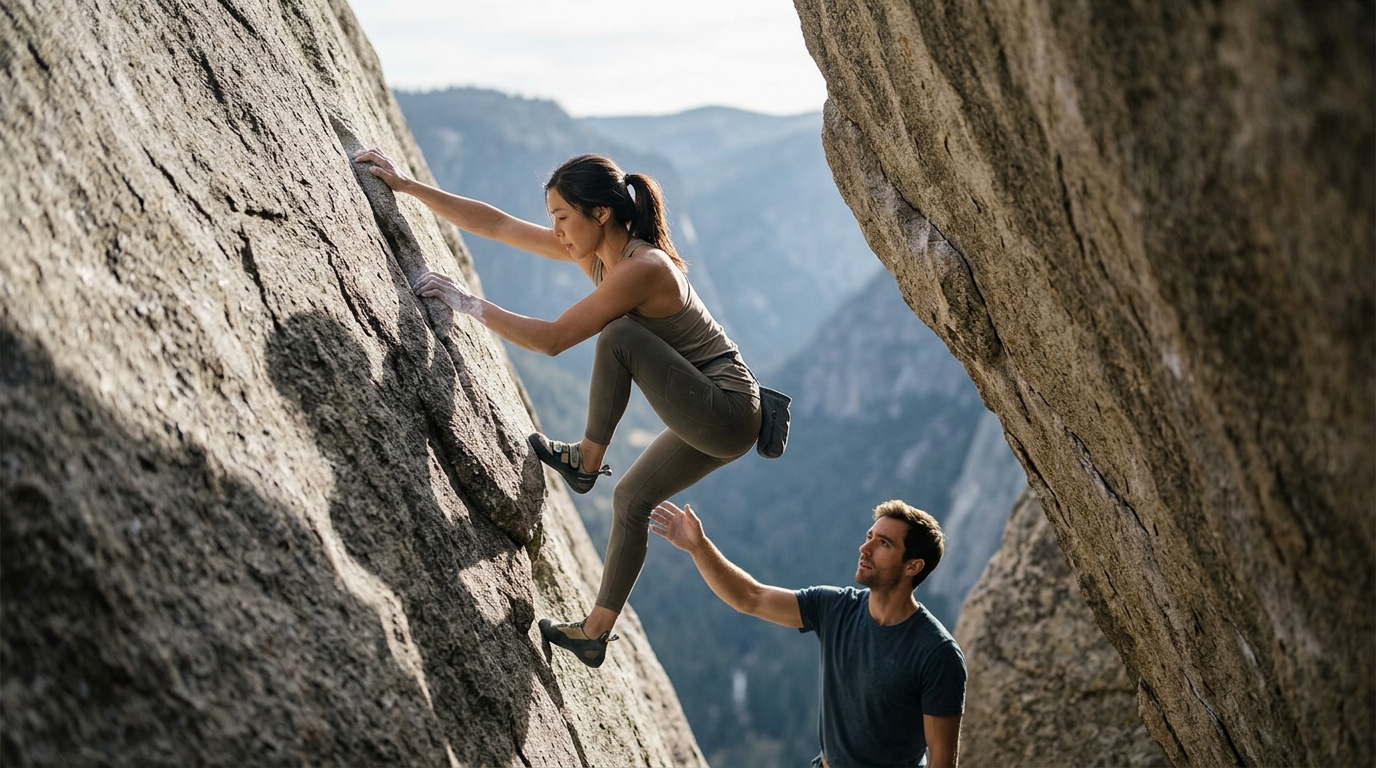
Rock climbing is often mistaken for a pure test of upper body strength, but data shows that elite climbers rely on precise technique to conserve energy and ascend harder routes. According to a 2023 analysis of competitive climbing biomechanics, efficient weight distribution can reduce forearm pump by up to 40 percent compared to untrained climbers. This disparity highlights why mastering climbing efficiency is the single most important factor in progressing from beginner to advanced levels. At Paradigm Climbing, we emphasize that understanding the "why" behind every movement is just as critical as the movement itself. This guide details seven core techniques to help you move with fluidity, power, and grace on the wall.
The Foundation: Precision Footwork
Most climbers spend the majority of their time looking up at the next hold, neglecting the most powerful muscle group in their body: their legs. Climbing efficiency begins with the feet. Precision footwork is not just about placing your foot on the hold; it is about using the toe of the shoe to find the smallest possible contact point that offers maximum friction and stability.
When you step up, aim to place your foot directly on the edge or pocket with your big toe. This minimizes the surface area and increases pressure per square inch, allowing you to stand on the wall rather than hang from it. A common mistake is "toe hooking" or dragging the heel, which reduces stability and forces your arms to compensate. By trusting your feet, you allow your skeletal structure to bear the load instead of your muscular system.
For climbers looking to refine this skill, structured training is essential. Our custom climbing plans are designed to isolate footwork drills, ensuring you build the proprioception needed for precise placement. Remember, your feet are your anchors. If they slip, your efficiency collapses.
Weight Distribution and Center of Gravity
Understanding where your center of gravity (COG) sits relative to the wall is crucial for maintaining balance. When you stand upright on a vertical wall, your COG is far forward, forcing your arms to hold your entire body weight. This is inefficient and leads to rapid fatigue.
To improve efficiency, you must learn to shift your COG over your feet. This is often achieved through a technique called "flagging" or "crossing over." Flagging involves extending one leg out to the side to counterbalance the weight of your other leg, preventing your hips from swinging away from the wall. Crossing over allows you to reach higher holds without losing balance by shifting your hip position.
According to biomechanical studies on climbing performance, climbers who maintain their COG close to the wall reduce the torque on their fingers by significant margins. This means less grip strength is required, allowing you to climb longer and harder. Practice these balance drills on easy routes until they become second nature.
Hip Rotation and Close-to-Wall Climbing
One of the most visible signs of an efficient climber is their hip position. Inefficient climbers often "bellied out," letting their stomachs hang away from the wall. This distance creates a lever arm that multiplies the force required by your fingers and forearms. Close-to-wall climbing eliminates this lever, making holds feel lighter and easier to reach.
Hip rotation is the key to staying close to the wall. By rotating your hips toward the wall, you can extend your legs further and reach higher holds without pulling with your arms. This is particularly important on slab climbing, where friction is your primary source of support. A certified strength and conditioning coach can help you develop the hip mobility and core strength required to maintain this position. Coach Charlie Schreiber, founder of Paradigm Climbing, emphasizes that hip mobility is often the missing link for climbers stuck at a specific grade.
Try this drill: On a comfortable route, consciously rotate your hips toward the wall with every step. Notice how much easier it becomes to reach the next hold. This simple adjustment can dramatically improve your climbing efficiency and reduce arm pump.
The Power of Straight Arms
Perhaps the most counterintuitive yet effective technique for improving climbing efficiency is keeping your arms straight. When you hang from a bent elbow, you are relying on your biceps and forearms to hold your body weight. These muscles fatigue quickly. When your arms are straight, your skeleton supports your weight, and your fingers act merely as hooks.
This technique is known as "skeletal stacking." It allows you to rest your arms between moves, conserving energy for the crux sections of the route. Many beginners instinctively pull with their arms, which leads to premature failure. Instead, focus on pushing with your legs and keeping your arms extended.
Research into climbing physiology indicates that skeletal stacking can extend climbing duration by up to 30 percent compared to muscular hanging. To practice this, climb a route where you are forced to keep your arms straight until you are ready to make the next move. This builds the mental discipline and physical awareness needed for efficient climbing.
Core Engagement for Balance
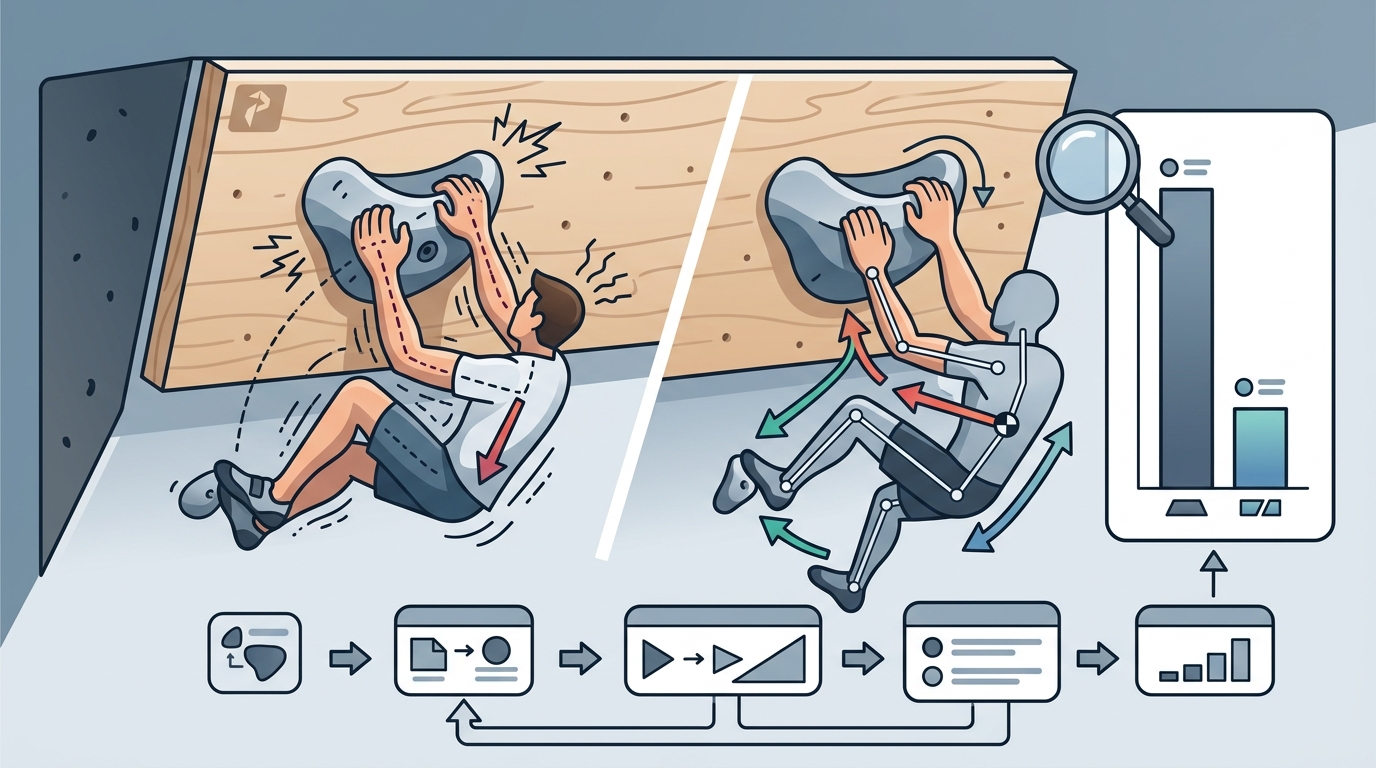
Your core is not just for aesthetics; it is the central hub of your climbing power. Engaging your abdominal and lower back muscles helps stabilize your body, allowing for precise foot placement and smooth transitions between holds. A strong core also prevents your hips from swinging out, which is critical for maintaining close-to-wall climbing.
Core engagement is particularly important when reaching for distant holds. By tightening your core, you create a solid platform from which to push with your legs. This transfer of power from the ground up is the essence of efficient climbing. Without core stability, your movements become jerky and energy-intensive.
Incorporate core-specific exercises into your off-wall training. Planks, hanging leg raises, and rotational exercises can all improve your on-wall stability. Our training plans include targeted core work to help you build this essential foundation. Remember, a engaged core makes you feel lighter on the wall.
Reading the Route Ahead
Climbing efficiency is not just about physical movement; it is also about mental preparation. Reading the route ahead allows you to plan your beta, or sequence of moves, before you start climbing. This reduces hesitation and unnecessary movements on the wall, which are major energy drains.
When you read a route, look for the next three to five holds. Identify the type of hold, the body position required, and the foot placement needed. This mental map allows you to move with purpose and confidence. It also helps you anticipate difficult sections, allowing you to prepare your body and mind for the crux.
At Paradigm Climbing Blog, we frequently discuss the importance of mental strategy in climbing. By combining physical technique with mental preparation, you can climb more efficiently and enjoy the process more. Take the time to read every route before you attempt it. This simple habit can significantly improve your climbing efficiency and success rate.
Mental Clarity and Breathing
The final technique for improving climbing efficiency is mental clarity and controlled breathing. Climbing is as much a mental game as it is a physical one. Anxiety and tension can cause you to grip too hard, breathe shallowly, and make poor decisions. All of these factors reduce efficiency.
Focus on deep, rhythmic breathing while climbing. This oxygenates your muscles and calms your nervous system. When you feel tension rising, take a moment to shake out your arms and reset your breath. This brief pause can restore efficiency and prevent panic.
Mental clarity also involves staying present in the moment. Do not worry about the top of the route or the grade. Focus on the current hold and the next move. This mindfulness reduces cognitive load and allows your body to move more naturally. Our testimonies show that climbers who master their mental game often see the most dramatic improvements in their performance.
Comparing Training Approaches for Efficiency
Not all training methods yield the same results for climbing efficiency. Below is a comparison of common training approaches to help you choose the right path for your goals.
| Training Approach | Primary Focus | Efficiency Impact | Best For |
|---|---|---|---|
| Custom Coaching | Personalized technique correction | High | Climbers seeking rapid progress |
| Hangboarding | Finger strength and power | Medium | Advanced climbers |
| Volume Climbing | Endurance and movement | Medium | Boulderers and sport climbers |
| Core Conditioning | Stability and balance | High | All levels |
Key Takeaways
- Precision footwork reduces reliance on arm strength by up to 40 percent.
- Keeping arms straight utilizes skeletal stacking, conserving energy for crux moves.
- Hip rotation allows for closer-to-wall climbing, reducing torque on fingers.
- Core engagement stabilizes the body, enabling precise and powerful movements.
- Reading the route ahead minimizes hesitation and unnecessary energy expenditure.
- Controlled breathing prevents panic and maintains muscle oxygenation.
- Coach Charlie Schreiber has mentored athletes from V0 to V17 levels using these principles.
Frequently Asked Questions
How can I stop my arms from pumping?
To stop your arms from pumping, focus on keeping them straight as much as possible. Use your legs to push your body up rather than pulling with your arms. Additionally, ensure your weight is centered over your feet to reduce the load on your grip.
What is the most important part of climbing technique?
Most coaches agree that footwork is the most important part of climbing technique. Precise foot placement allows you to stand on the wall, freeing your arms to focus on balance and direction rather than holding your weight.
How does hip position affect climbing efficiency?
Hip position directly affects your center of gravity. Rotating your hips toward the wall allows you to reach higher holds and maintain balance with less effort. Bellied-out hips create a lever arm that increases the force required by your fingers.
Can I improve my climbing efficiency without training?
While formal training accelerates progress, you can improve efficiency by focusing on technique during every climb. Practice straight arms, precise feet, and hip rotation on easy routes to build muscle memory.
What role does mental clarity play in climbing?
Mental clarity reduces tension and improves decision-making. By staying calm and focused, you can execute moves more efficiently and conserve energy. Anxiety leads to gripping too hard and breathing shallowly, both of which reduce efficiency.
How often should I practice footwork drills?
Integrate footwork drills into every climbing session. Dedicate the first 15 minutes of your climb to focusing solely on precise foot placement. Consistent practice is key to developing the proprioception needed for efficiency.
Is core strength necessary for climbing?
Yes, core strength is essential for stability and balance. A strong core allows you to transfer power from your legs to your hands efficiently. It also helps maintain close-to-wall climbing, which is crucial for efficiency.
Start Your Journey to Efficient Climbing
Improving climbing efficiency is a journey that requires patience, practice, and the right guidance. By mastering these seven techniques, you can climb harder, longer, and with greater enjoyment. At Paradigm Climbing, we are dedicated to helping you unlock your full potential through expert coaching and personalized training plans. Contact us today to book a consultation and start your path to climbing excellence.